Zen Minimalist Painting: Creating Calm Space Through Art
Zen Minimalist Painting: Cultivating Tranquility Through Art
In our fast-paced existence, establishing serenity at home feels increasingly vital. Zen minimalist painting provides an attractive answer. This form of art infuses tranquillity into any space, fostering simplicity in a striking manner.
What's Unique About Zen Minimalist Painting?
Zen minimalist painting merges two powerful ideologies: Zen philosophy, with its emphasis on mindfulness and simplicity; and minimalism, with its "less is more" principle.
The fusion results in artwork that is soft-spoken yet profound. These paintings do not clamor for attention. Instead, they quietly imbue calm into your everyday life.
The charm lies not in what is shown, but in what is omitted. Open spaces become as crucial as brushstrokes. This reflects the notion of finding solace in life's still moments.
The Psychological Facets of Minimalist Art
Surprisingly, our minds yearn for simplicity. Intricate, overflowing visuals can, in fact, intensify stress. Minimalist paintings extend our minds an invite to unwind.
Research indicates that viewing simplistic art lowers cortisol production - the primary stress hormone of our bodies. When gazing at zen minimalist paintings, your nervous system instinctively relaxes.
The uncluttered compositions allow your thoughts to stabilize, devoid of any visual discord vying for attention. This encourages a conducive mental environment for creativity and introspection.
Indispensable Features of Zen Minimalist Paintings
Negative Space
Void spaces are far from being actually void. They provide a breather for your senses. Zen artists refer to this as "ma" - the meaningful pause that illuminates what remains.
Regard negative space as the silence amidst musical notes. Without it, melodious sounds turn into noise. Your artwork needs these tranquil intervals to truly resonate.
Limited Color Palettes
Typically, zen minimalist paintings employ a maximum of two to four colors. Earth tones such as warm grays, subdued beiges, and muted greens are particularly potent.
Monochromatic schemes ensure harmony instantaneously. Experiment with various shades of the same color for results that exude a sense of natural sophistication and peace.
Simple Geometric Forms
Fundamental shapes like circles, lines, and rectangles are the essence of minimalist composition. These basic figures possess a familiarity that comfort our minds.
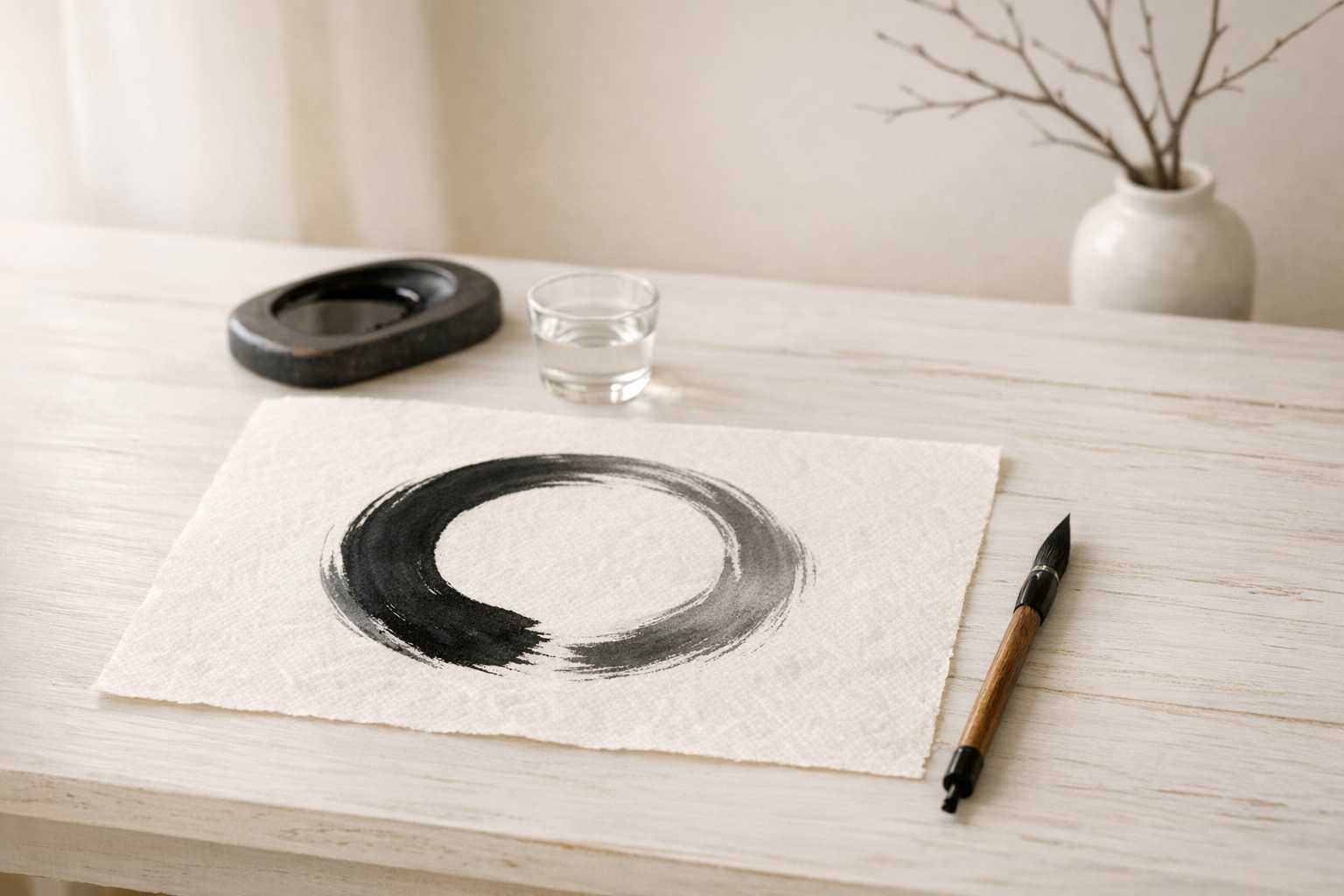
A solitary brushstroke can serve as a form of meditation. A single, strategically positioned circle may signify completeness or natural cycles. Simplicity does not equate to insignificance.
Embarking on Your Zen Minimalist Journey
Choose Your Medium Astutely
Watercolors are excellent for beginners, generating soft, seamless effects. Their translucent nature introduces depth without complexity.
For more control and precise edges, opt for acrylic paints. They dry fast, enabling gradual layering. Both mediums are suitable for crafting stunning zen minimalist artwork.
Begin with Small and Simple Steps
Starting with a single brushstroke on white paper can illustrate how it alters the entire composition. Such an exercise aids in understanding the impact of intentional marks.
Attempt painting merely a horizontal line. Its placement significantly influences the mood - a high horizon creates a grounding effect, while a low one hints at boundless potential.
Cultivate Mindful Painting
View each session as an active meditation. Concentrate on your breath while working. Refrain from having preset expectations of the end product.
Pay heed to the sensation of the brush in your hand. Observe the paint spreading over the surface. This awareness seeps into the artwork.
Popular Zen Minimalist Techniques
Sumi-e Inspired Brushwork
This Japanese painting style prioritizes brevity of line. Every brushstroke must justify its presence in the composition.
Practicing with varying paint quantities on your brush can yield interesting results. A single stroke can transition from dark to light or thick to thin, adding natural dynamism.
Wabi-Sabi Aesthetics
This philosophy appreciates the beauty in flaws. Slightly irregular circles are more authentic than perfect ones. Let your natural hand movement be evident.
Embrace unexpected developments. A surprising drip could become your favorite detail. Wabi-sabi believes in the concept that imperfections enhance beauty.
Layered Transparency
Construct understated depth through transparent layers. Each layer increments complexity while preserving simplicity, creating a visually engaging yet uncluttered effect.
Allow each layer to dry thoroughly before applying the next. The slow process invites mindful creation, integrating patience into your practice.
Showcasing Your Zen Minimalist Art
Establish Breathing Room
Grant your paintings sufficient space on the wall. Crowded collections contradict minimalist tenets. Occasionally, a single flawless piece communicates more effectively than multiple ones.
Consider the wall color behind your art. Minimalist artwork truly stands out against white or delicately neutral backgrounds. The wall complements the overall composition in such cases.
Importance of Natural Lighting
Zen minimalist paintings heavily rely on subtle tonal differences. Effective lighting unveils these delicate interplays. Avoid harsh direct light that causes glare.
Soft, indirect natural light is ideal. The illumination changes throughout the day, lending a sense of vitality to your art. This dynamic dimension adds another layer of interest.
Room Integration
Consider how your painting connects with the entire space. Minimalist art should seamlessly blend into the room's rhythm.
Factor in furniture arrangement and room functionality. A soothing painting next to your reading chair augments peaceful moments. The artwork's positioning impacts its role in your daily life.
The Therapeutic Advantages
Stress Alleviation
Creating zen minimalist art naturally diminishes stress levels. The slow, mindful process triggers your parasympathetic nervous system, which controls rest and digestion.
Even simply observing minimalist art can reduce anxiety. The simplistic compositions don't burden your visual processing capabilities, giving your mind a genuine opportunity to relax and rejuvenate.
Enhanced Concentration
Regular practice improves focus. Deciding what to include or exclude necessitates meticulous attention. This focus training extends to other areas of life.
The meditative aspect of crafting minimalist art enhances mental clarity. Numerous practitioners report improved decision-making skills. Simplicity in art encourages simplicity in thought.
Emotional Equilibrium
Zen minimalist painting encourages a gentle exploration of emotions. The abstract nature allows feelings to manifest without judgment. There's no prescribed way to feel.
The practice fosters patience towards oneself and one’s process. On some days, the brushwork might flow seamlessly. Others may present challenges. Both experiences are valuable.
Common Pitfalls to Avoid
Overcomplicating Simple Concepts
The primary trap is incorporating too much. Whenever uncertain, eliminate elements rather than introducing more. Trust that less can indeed be more.
Regularly step back from your artwork. Distance provides clarity on whether the composition feels balanced or cluttered. Initial instincts regarding simplicity are often accurate.
Harried Creation
Zen minimalist painting rewards patience. Swift execution often bypasses the meditative benefits. Allocate ample time for each session.
The drying intervals between layers offer natural pauses for introspection. Utilize these moments to thoughtfully evaluate your work. What does it need? What should be removed?
Imitating Rather Than Innovating
While studying masters is beneficial, direct imitation should be avoided. Your unique style surfaces through experimentation. Trust your individual aesthetic sense.
Draw inspiration from sources like nature, music, or poetry. These often lead to more authentic outcomes than replicating other paintings. Discover your unique perspective within minimalist principles.
Developing Your Practice
Daily Sketching Routines
Spend ten minutes each day making simple marks to improve hand-eye coordination and expand your visual vocabulary. Regularity is more crucial than duration.
Maintain a small sketchbook for zen doodles. Simple circles, lines, and dots can prove to be surprisingly meditative. These exercises prime you for larger projects.
Observing Natural Elements
Nature is a limitless source of minimalist inspiration. Observe how a leafless tree branch forms elegant lines against a winter sky. Study cloud patterns and ripple formations.
Photography skills can assist you in identifying minimalist compositions in everyday life. Look for instances when less becomes more. Train your eye to recognize these naturally zen moments.
Engaging with a Community
Find other minimalist artists online or in your local area. Sharing experiences enriches your journey and makes it more sustainable. Fellow artists can provide fresh insights into your work.
Consider participating in workshops or classes. Learning in a group creates a sense of positive accountability. The social interaction balances the solitary nature of painting.
Conclusion
Zen minimalist painting provides a route to both artistic expression and internal peace. Through mindful practice and uncomplicated brushstrokes, you create not just art, but tranquillity.
It's the journey that truly counts, not only the destination. Every painting session becomes an opportunity for meditation and personal growth. Your walls receive beautiful art while your spirit discovers tranquillity.
Start today with just a brush, paint, and paper. Let simplicity drive your creativity and trust that by discarding the unnecessary, you'll unearth what truly matters.
Your zen minimalist paintings will not just refresh your walls, but redefine your entire relationship with space and calm. In our intricate world, this straightforward art form provides a tangible sanctuary.